Opal is prized for its mesmerizing play-of-color — flashes of rainbow hues. Black opal from Australia is the most valuable; body tone and color play set the price.
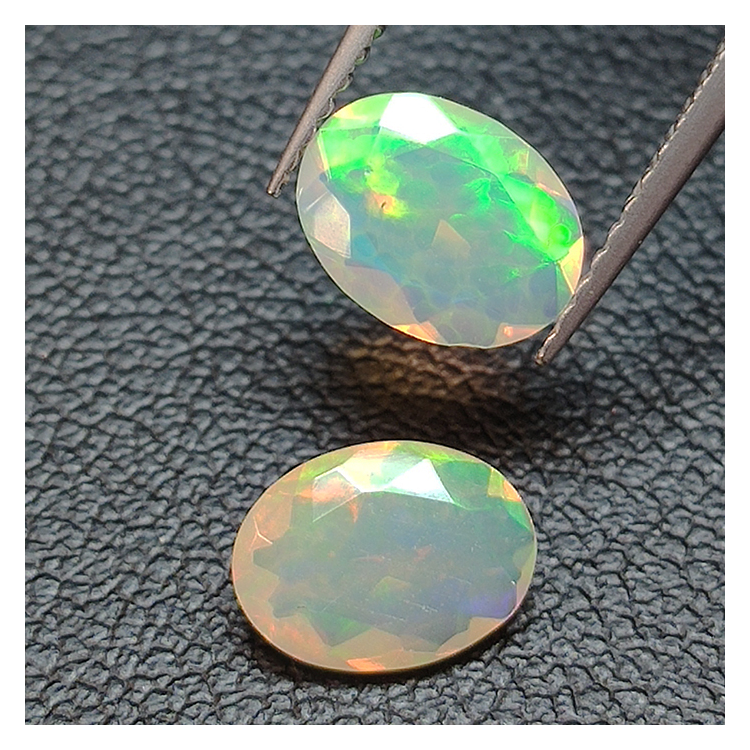
Opal value is driven by body tone (black is rarest), the brightness and pattern of play-of-color, and durability.
A dark body tone makes play-of-color blaze; Lightning Ridge (Australia) black opal is the most valuable of all.
Light or transparent body with play-of-color; the most common type, very wide value range.
Mexican fire opal (orange body) and Ethiopian Welo (bright play, can absorb water) offer vivid color at lower cost.
Six main criteria determine the price per carat. It is their combination that sets the final value.
Play-of-color is everything: brightness, the range of colors, and the pattern (broad flash and harlequin are best). Red flashes are the rarest and most valuable.
Australia (Lightning Ridge for black; Coober Pedy for white) leads; Ethiopia and Mexico are major sources.
Fine opal is untreated, but beware of smoke/sugar treatment and dyeing on cheaper material, and of doublets/triplets (composites).
Opal is judged on body tone and play-of-color rather than transparency; cracks ("crazing") sharply reduce value.
Sold per carat, but a strong, even play-of-color matters far more than size alone.
A report from a recognized lab (GIA, SSEF, Gübelin, GRS, AGL) confirms identity, origin and treatment, securing the valuation and resale.

The brilliance, color range and pattern of the flashing colors set the price; a dark (black) body makes them blaze.
Broad-flash and harlequin patterns with red are the rarest and most valuable.
Solid natural opal is worth far more than doublets or triplets (thin opal glued to a backing).
"Crazing" (fine cracks) and treatments severely reduce value — buy from reliable sources.
Geographic origin can be a strong prestige marker that weighs on value.
The source of top black opal; the most valuable.
Very high priceFamous white and crystal opal.
Mid-high priceBright play-of-color; can be hydrophane.
Mid priceFire opal with orange body color.
AccessibleCrystal and white opal.
AccessibleSome fine opal, often crazes.
CollectorIllustrative price index (2010 = 100) for fine, certified stones.
Fine Australian black opal is scarce and has appreciated steadily; everyday white and Ethiopian opal are affordable.
Solid, untreated stones with strong play-of-color are the most liquid.
Illustrative figures for fine, certified stones — not financial advice.
Orders of magnitude — black opal sits far above white and Ethiopian opal.
Indicative estimates — they do not replace a laboratory appraisal.
Enter color, weight, treatment and origin: our estimator computes an instant price range, then generates a detailed report.
💎 Start free valuation →