HomeGemstones › Peridot
💎 Valuation guide

Peridot: price and value per carat

Peridot is the gem variety of olivine, famous for its lively yellowish-green. Always green and rarely treated, its value rises with size and the purity of its color.
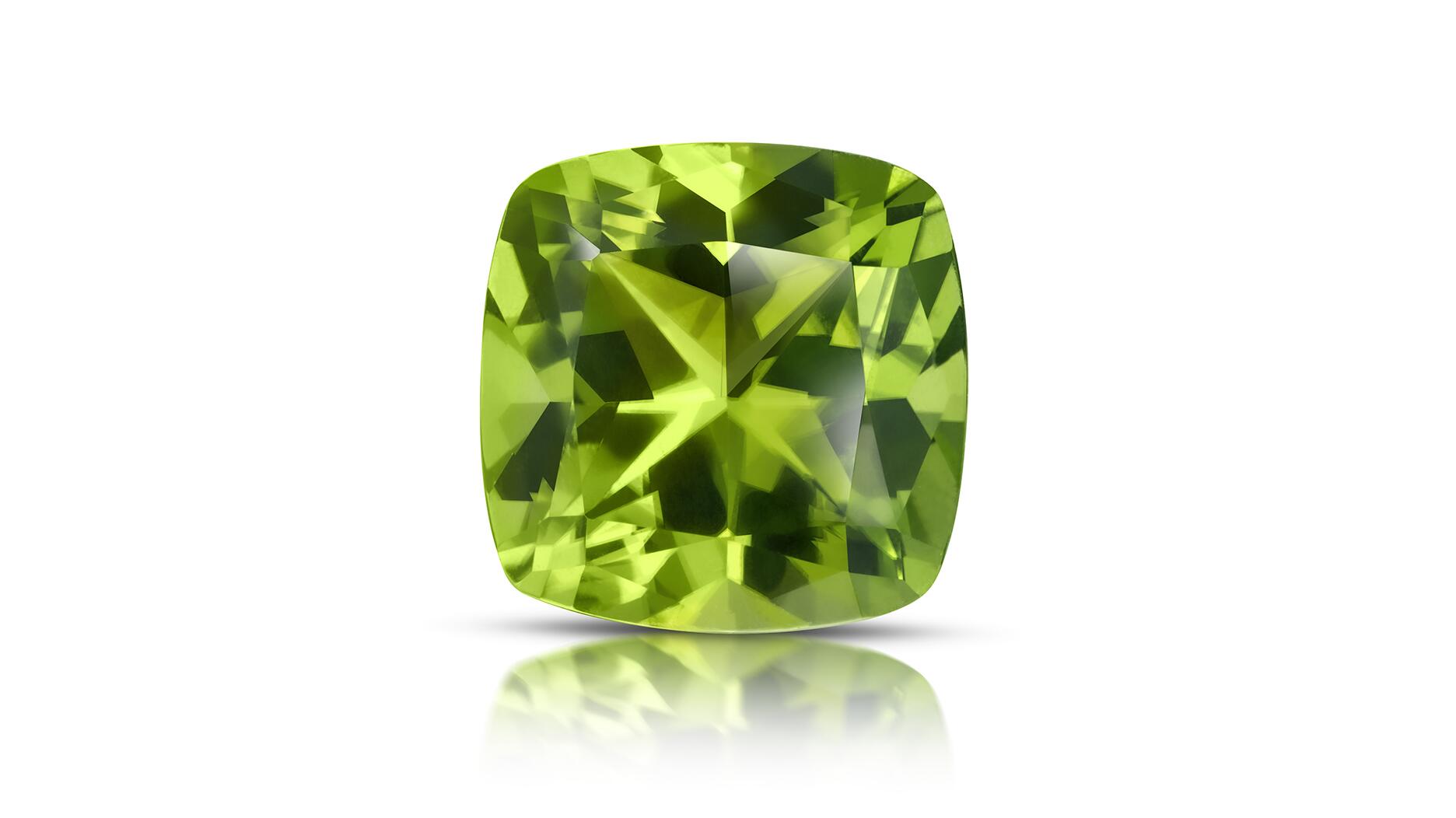
Peridot gemstone
$20 – $1,000+indicative range / carat
Family
Olivine (forsterite)
Hardness (Mohs)
6.5–7/10
Colors
Yellowish-green to pure green
Top origins
Pakistan, Myanmar, USA
Varieties

The different types of peridot

Peridot is always green; value comes from a rich, pure-green color and from larger clean sizes.

Most prized

Fine green peridot

A rich, pure green with minimal yellow, often from Pakistan (Kashmir) or Burma in larger sizes.

$100 – $1,000+ /ct
Classic

Yellowish-green peridot

The familiar lively green of most jewelry; bright and very affordable.

$20 – $100 /ct
Rare

Pallasite (meteorite) peridot

Peridot crystals from pallasite meteorites — a collector curiosity rather than a mainstream gem.

varies (collector)
Valuation

What drives a peridot's value

Six main criteria determine the price per carat. It is their combination that sets the final value.

🎨

Color

The key factor: a rich, pure green with little yellow or brown is most valuable. Brownish or pale stones are cheap.

🌍

Origin

Pakistan (high-altitude) and Burma produce the finest large stones; Arizona (USA) supplies abundant smaller material.

🔥

Treatment

A clear advantage: peridot is almost always untreated, so its color is fully natural.

🔍

Clarity & cut

Eye-clean stones command a premium; the cut should maximize brilliance and color while keeping good proportions.

⚖️

Weight (carat)

Large clean peridot (over 5–10 ct) with fine color is scarce and rises strongly in price per carat.

📜

Certificate

A report from a recognized lab (GIA, SSEF, Gübelin, GRS, AGL) confirms identity, origin and treatment, securing the valuation and resale.

Pure green, minimal yellow
The decisive factor

Pure green, minimal yellow

The most valuable peridot shows a rich, slightly pure green; too much yellow or any brown lowers value.

Larger stones from Pakistan and Burma can reach a deep, lively color rarely seen in small material.

Pure greenLivelyLarge = rare
A natural advantage

Untreated and ancient

Peridot is essentially never treated, so what you see is the natural color.

Used since antiquity (the "gem of the sun"), it remains an affordable, characterful green.

UntreatedAlways greenAffordable
Provenance

Famous origins & impact on price

Geographic origin can be a strong prestige marker that weighs on value.

🇵🇰 Pakistan

High-altitude Kashmir peridot: fine large stones.

High for large

🇲🇲 Burma (Myanmar)

Rich-green Mogok peridot.

Mid-high price

🇺🇸 USA (Arizona)

Abundant smaller commercial peridot.

Accessible

🇨🇳 China

Large output of commercial material.

Accessible

🇻🇳 Vietnam

Good mid-range stones.

Accessible

🇪🇬 Egypt (Zabargad)

Historic ancient source.

Historic
Investment

Peridot value over time

Illustrative price index (2010 = 100) for fine, certified stones.

Affordable, steady demand

Peridot is a value gem rather than an investment stone, but fine large Pakistani material has firmed in price.

Its untreated, always-natural color is a selling point.

+40%fine peridot index, 2010–2025
2.3%avg. annual appreciation*

Illustrative figures for fine, certified stones — not financial advice.

10311512713920102014201820222025
Fine peridot price index (2010 = 100)
Benchmarks

Indicative price ranges

Orders of magnitude for a faceted peridot — fine large Pakistani stones sit at the top.

Quality
Origin / treatment
Indicative price / carat
Small/commercial
Arizona/China
$20 – $60
Good
Clean yellowish-green
$60 – $150
Very fine
Pure green, larger
$150 – $500
Exceptional
Large fine Pakistani/Burmese
$500 – $1,000+

Indicative estimates — they do not replace a laboratory appraisal.

Value your peridot in under a minute

Enter color, weight, treatment and origin: our estimator computes an instant price range, then generates a detailed report.

💎 Start free valuation →
FAQ

Frequently asked questions — Peridot

How much is a peridot worth per carat?
From about $20/carat for small commercial stones to over $500/carat for large, fine pure-green Pakistani or Burmese peridot.
Is peridot treated?
No — peridot is almost always untreated, so its green color is completely natural.
What color is the best peridot?
A rich, pure green with as little yellow or brown as possible; this is found mainly in larger fine stones.
Where does the finest peridot come from?
High-altitude Pakistan (Kashmir) and Burma produce the finest large stones; Arizona supplies abundant smaller material.
How do I value my peridot for free?
Use the GemValue Pro online estimator: enter color, weight and clarity for an instant range and a detailed report.

Other gemstones