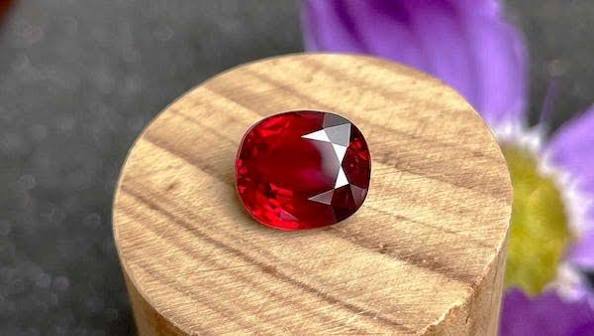
Ruby is the red variety of corundum, the same mineral as sapphire. The rarest and most valuable colored gemstone in large fine sizes, it is prized above all for its vivid pure red.
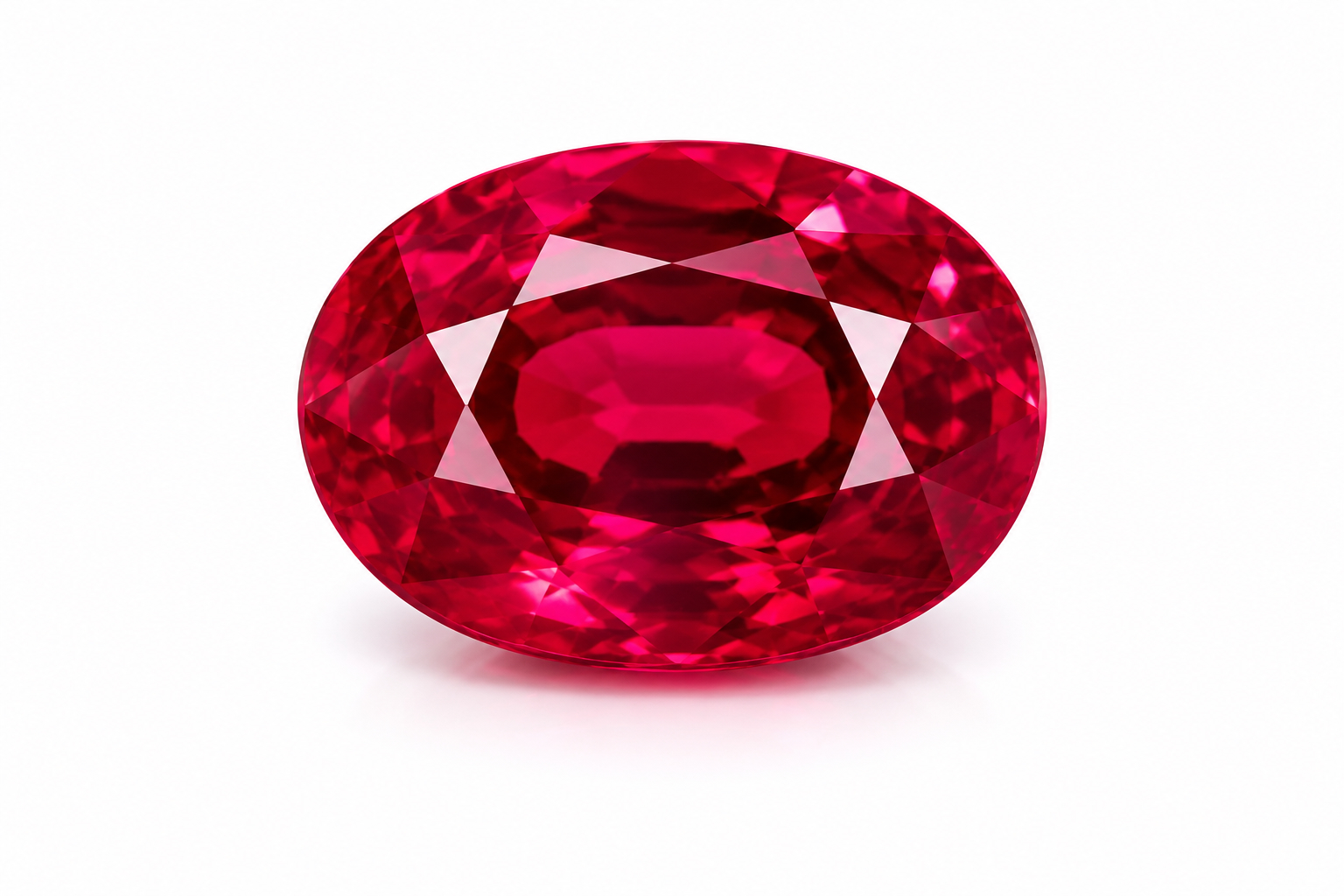
Ruby is defined by its red; the difference between a good ruby and a great one is color saturation and origin.

A vivid, slightly purplish pure red with strong fluorescence. The benchmark term for top Burmese rubies and the highest prices.

The dominant modern source: clean, richly colored stones offering excellent value, increasingly seen at the high end.

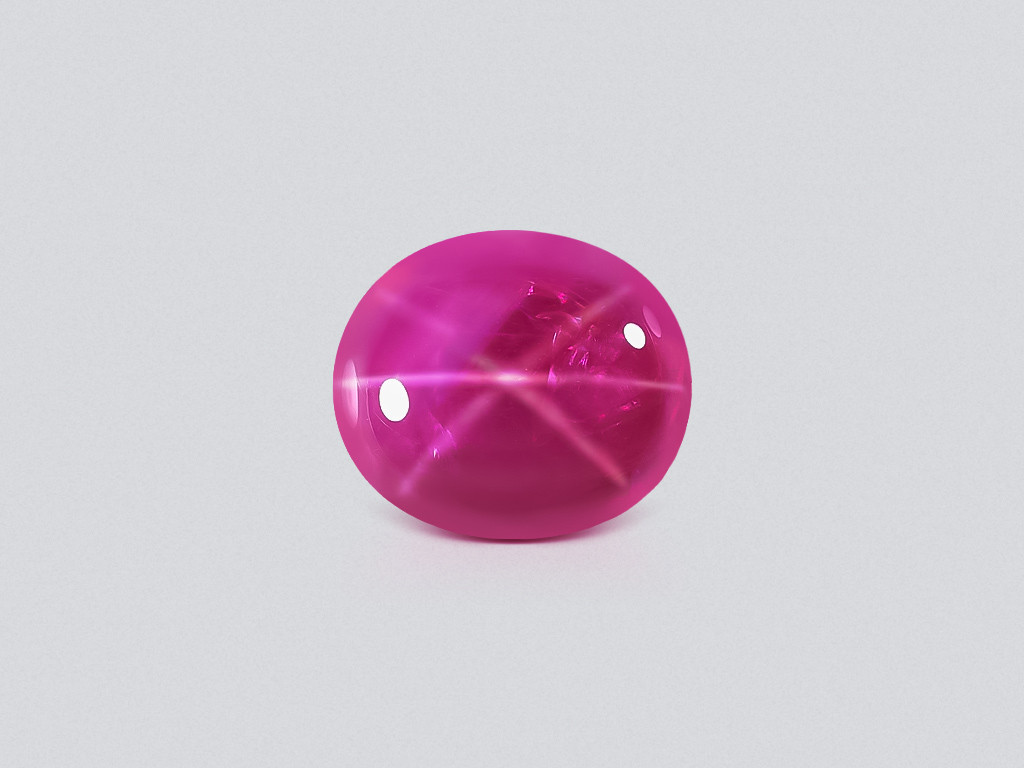
Cut en cabochon, it shows a 6-rayed star. Valued for a sharp star over a strong, translucent red body.
Six main criteria determine the price per carat. It is their combination that sets the final value.
The #1 factor. A vivid, pure red — neither too dark nor too pink — is ideal; the famous "pigeon-blood" red commands the highest premiums.
Burma (Myanmar) leads on prestige, followed by Mozambique. A certified Burmese origin can multiply value several times for equal color.
Most rubies are heated, which is accepted. Unheated certified rubies are far rarer and command a strong premium; glass-filled rubies are worth a fraction.
Eye-clean stones command a premium; the cut should maximize brilliance and color while keeping good proportions.
Fine rubies above 2–3 ct are exceptionally rare, so price per carat jumps dramatically with size.
A report from a recognized lab (GIA, SSEF, Gübelin, GRS, AGL) confirms identity, origin and treatment, securing the valuation and resale.

The ideal is an intense, slightly fluorescent red that glows. Too dark reads as garnet-like; too light slips into pink sapphire territory and loses value.
Strong fluorescence under daylight makes Burmese rubies appear to light up from within.
Routine heating improves color and is market-standard. But an unheated ruby, lab-attested, is rare and trades at a premium.
Avoid lead-glass-filled rubies: they look richer but are composite stones worth a small fraction of a natural ruby.
Geographic origin can be a strong prestige marker that weighs on value.
Legendary pigeon-blood reds with fluorescence; the top of the market.
Very high priceMajor modern source; fine clean reds now reaching the high end.
High priceDarker, often heated stones; a key cutting and trade hub.
Mid priceLighter pinkish-red stones, generally good clarity.
Mid priceHistoric small deposit known for fine color.
AccessibleKenya and Tanzania supply commercial to fine material.
AccessibleIllustrative price index (2010 = 100) for fine, certified stones.
Top rubies have set per-carat auction records, driven by extreme scarcity of fine large unheated stones.
Liquidity is strongest for certified Burmese material; commercial rubies move more slowly.
Illustrative figures for fine, certified stones — not financial advice.
Orders of magnitude for a faceted red ruby — exceptional Burmese stones can far exceed these figures.
Indicative estimates — they do not replace a laboratory appraisal.
Enter color, weight, treatment and origin: our estimator computes an instant price range, then generates a detailed report.
💎 Start free valuation →