💎 Valuation guide
Topaz: price and value per carat
Topaz ranges from inexpensive treated blue to the rare and prized golden-pink Imperial topaz. The variety and color make all the difference in value.
$5 – $3,000+indicative range / carat
Topaz ranges from inexpensive treated blue to the rare and prized golden-pink Imperial topaz. The variety and color make all the difference in value.
The gap between common blue topaz and rare Imperial topaz is enormous — variety drives nearly everything.
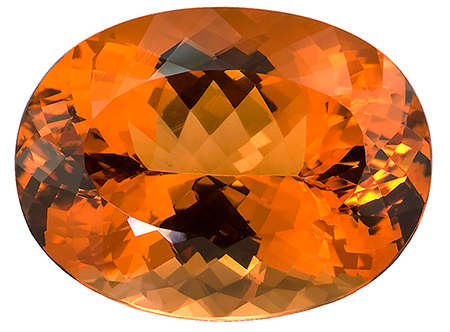
A rare golden-orange to pink-orange topaz, mainly from Ouro Preto, Brazil. The most valuable variety by far.
Almost always colorless topaz irradiated to blue (Sky, Swiss, London). Abundant and inexpensive.
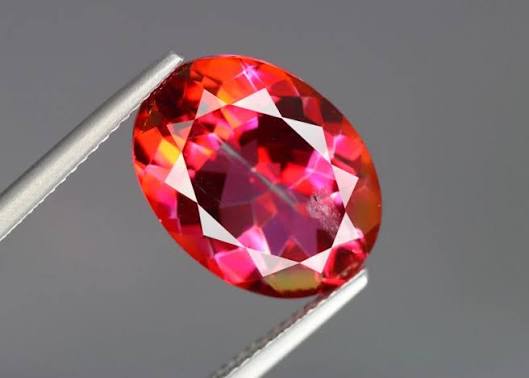
Natural pinks are scarce; some golden stones are gently heated to pink. Prized for delicate color.
Six main criteria determine the price per carat. It is their combination that sets the final value.
Decisive: rare natural golden-pink (Imperial) tops the market, while treated blue is abundant and cheap. Saturation and even color raise value within each type.
Brazil (Ouro Preto) is the source of Imperial topaz; Pakistan produces fine natural pinks.
Most blue topaz is irradiated and heated (stable, accepted). Natural-color Imperial and pink topaz are far more valuable.
Topaz is usually eye-clean; visible inclusions reduce value noticeably.
Blue topaz is cheap at any size; for Imperial, larger clean stones rise steeply in price per carat.
A report from a recognized lab (GIA, SSEF, Gübelin, GRS, AGL) confirms identity, origin and treatment, securing the valuation and resale.
Imperial topaz — golden-orange to pinkish — is rare and commands strong prices; treated blue topaz is a mass-market stone.
Within Imperial, a saturated pinkish-orange is most coveted.
Colorless topaz is plentiful and is irradiated then heated to produce stable blue colors at low cost.
Because the process is easy and abundant, blue topaz is among the most affordable gems — value lies in natural-color stones.
Geographic origin can be a strong prestige marker that weighs on value.
The classic source of rare Imperial topaz.
High for ImperialFine natural pink topaz.
Mid priceColorless and blue-able material.
AccessibleColorless topaz for treatment.
AccessibleHistoric source of fine topaz.
HistoricSherry and colorless topaz.
AccessibleIllustrative price index (2010 = 100) for fine, certified stones.
Common blue topaz has little investment merit, but fine natural Imperial and pink topaz hold and grow value.
Scarcity of Ouro Preto material supports prices for top Imperial stones.
Illustrative figures for fine, certified stones — not financial advice.
Orders of magnitude — note the huge gap between treated blue and natural Imperial topaz.
Indicative estimates — they do not replace a laboratory appraisal.
Enter color, weight, treatment and origin: our estimator computes an instant price range, then generates a detailed report.
💎 Start free valuation →