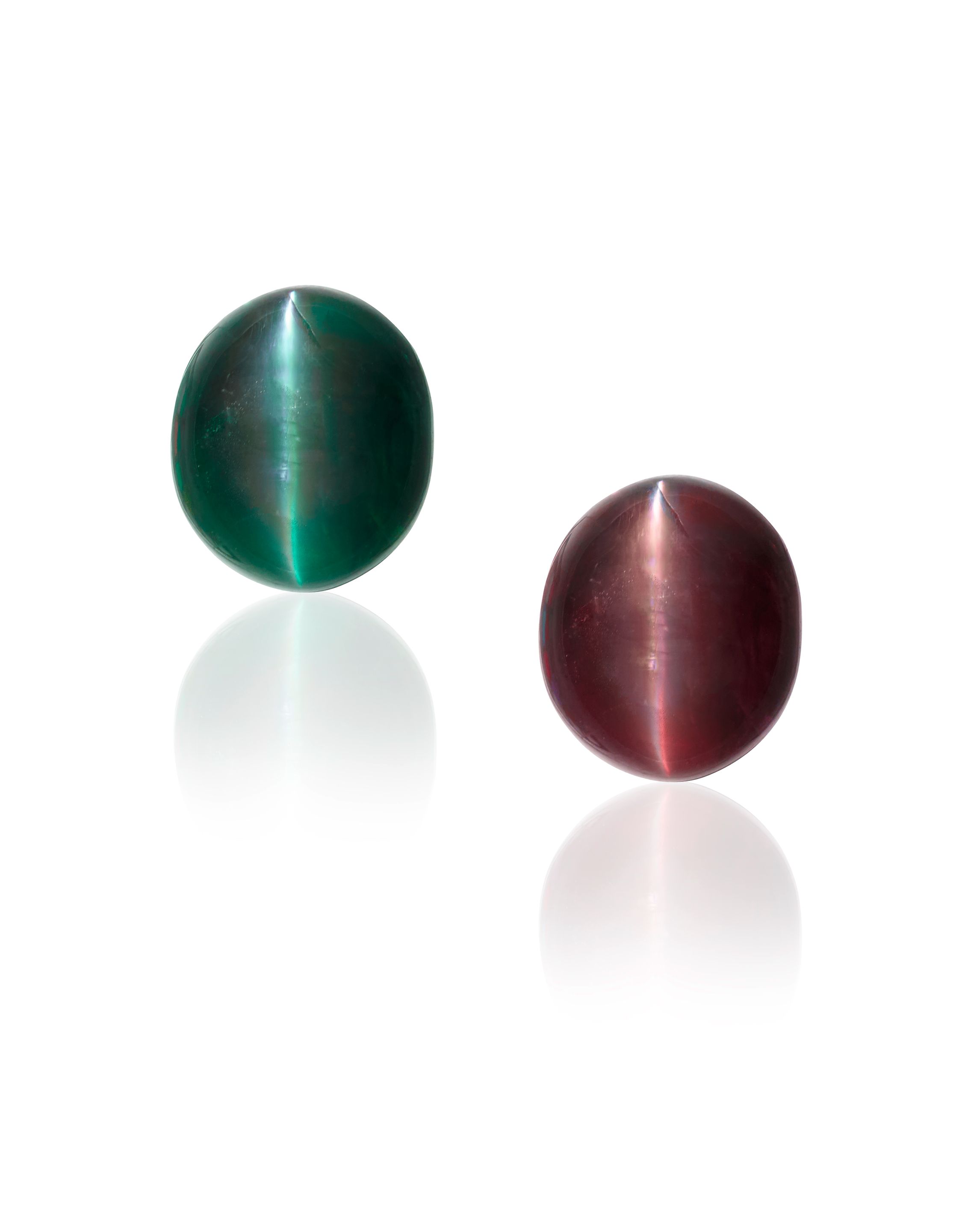
Alexandrite is the rare color-change variety of chrysoberyl: green in daylight, red-purple under incandescent light. Its scarcity makes it one of the most valuable gems of all.
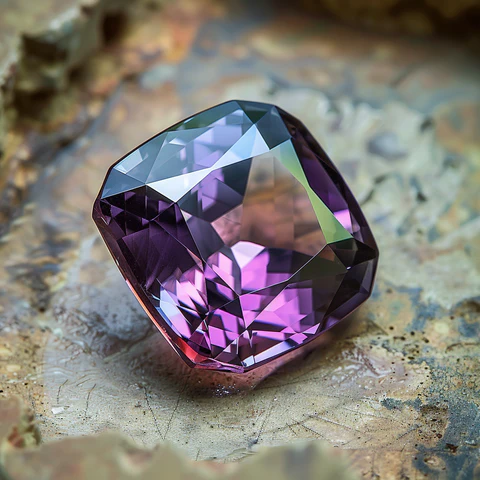
Alexandrite is judged first on the strength of its color change, then on the quality of both colors and origin.

The original Ural source: a strong, clean change from emerald-green to ruby-red. Historic stones reach the highest prices.
From Hematita: fine color change and good clarity; the main modern source of quality material.

Combines color change with chatoyancy in a cabochon — a doubly rare and collectible effect.
Six main criteria determine the price per carat. It is their combination that sets the final value.
The strength and purity of the color change is everything: a vivid green-to-red shift (a high "change percentage") is worth far more than a weak grey-to-brown one.
Russian origin carries historic prestige; Brazil and Sri Lanka are the main fine sources today.
Alexandrite is typically untreated. Lab confirmation of natural, untreated status supports value.
Eye-clean stones command a premium; the cut should maximize brilliance and color while keeping good proportions.
Clean alexandrites above 1–2 ct with strong change are extremely rare, so larger stones command steep premiums.
A report from a recognized lab (GIA, SSEF, Gübelin, GRS, AGL) confirms identity, origin and treatment, securing the valuation and resale.

The hallmark is a dramatic, complete color change with clean, saturated colors in both lighting conditions.
A strong change percentage and minimal grey or brown undertones separate fine stones from commercial ones.
Fine alexandrite is rarer than top ruby or emerald, especially in larger sizes, which sustains very high prices.
Because supply is so limited, a credible lab report strongly supports identity, origin and resale.
Geographic origin can be a strong prestige marker that weighs on value.
The original, historic source; intense prestige.
Very high priceMain modern source of fine color-change stones.
High priceLarger stones, sometimes with a softer change.
Mid-high priceNewer East African material of variable quality.
VariableSome color-change chrysoberyl, often weaker.
AccessibleEmerging fine color-change finds.
EmergingIllustrative price index (2010 = 100) for fine, certified stones.
With the Russian mines long exhausted, fine alexandrite is chronically scarce, supporting strong long-term prices.
Stones with a strong, certified color change are the most liquid at the high end.
Illustrative figures for fine, certified stones — not financial advice.
Orders of magnitude for a color-change alexandrite — fine Russian stones can far exceed these figures.
Indicative estimates — they do not replace a laboratory appraisal.
Enter color, weight, treatment and origin: our estimator computes an instant price range, then generates a detailed report.
💎 Start free valuation →